
Why Is My Car Pulling to One Side While Driving For No Reason?
A car that keeps drifting or tugging to one side can make every drive tiring. You might notice it most on the highway, where you are constantly nudging the wheel to stay in your lane. Sometimes the pull shows up right after a bump or a tire change, other times it creeps in slowly until you suddenly realize you are fighting the car on every straight stretch of road.
That pull usually means something in the tires, alignment, suspension, or brakes is steering the car for you.
What Pulling to One Side Feels Like
Pulling is more than just a light sensitivity to the road. The wheel may want to turn by itself, and if you relax your grip, the car quickly drifts toward the shoulder or center line. You might feel a stronger pull when accelerating, braking, or hitting bumps. In some cases, the steering returns to center slowly instead of snapping back like it used to. If you find yourself constantly correcting on a flat, straight road, the car is hinting that something is off even if there are no warning lights.
Tire and Wheel Problems That Can Cause a Pull
Tires are the first place a technician looks. A single tire that is low on air, damaged inside, or badly worn can easily cause a pull. If one front tire is several psi lower than the other, its rolling resistance changes, and the car can drift toward that side. A separated belt inside a tire can also change its shape, so it feels like the wheel is out of round even though the tread looks fine from the outside.
Wheels themselves matter too. Bent wheels from potholes, incorrect offset, or mismatched sizes side to side can all create strange handling. We often see vehicles where a rotation or recent tire replacement mixed different brands or tread patterns on the same axle, and the driver starts to notice a pull soon after. Matching tire type, size, and pressure across the axle is an easy first step before chasing more complex problems.
Alignment Issues That Steer the Car for You
Wheel alignment controls where the tires want to go when you are not touching the wheel. If toe or camber is out of range on one side, that tire may constantly try to climb toward or away from the center of the road. A hard curb strike, big pothole, or worn suspension part can knock alignment out, sometimes just enough to cause a mild but persistent pull.
Over time, misalignment can show up as feathered tread, inside or outside edge wear, or a steering wheel that sits crooked even when the car is going straight. A proper alignment check looks at all four wheels, not just the front, and compares them to factory specs. That is why “eyeballing” the toe or adjusting one tie rod without measuring can make the pull worse instead of better.
Suspension and Steering Wear That Leads to Drifting
Loose or worn suspension and steering components can let the wheels wander around more than they should. Worn control arm bushings, ball joints, or tie rods allow the wheel to shift under load, which can change alignment on the fly as you drive. That shifting might feel like the car responds differently every time you hit a bump or brake.
In more advanced cases, a seized strut mount or weak spring on one side can make the vehicle sit unevenly. That tilt changes how weight is distributed across the tires and can create a steady pull or a tendency to dart when you cross bumps. When we inspect cars with a strong pull and obvious noises or clunks, we often end up finding a mix of worn components that have been ignored for a long time.
Brake Problems That Drag the Vehicle Sideways
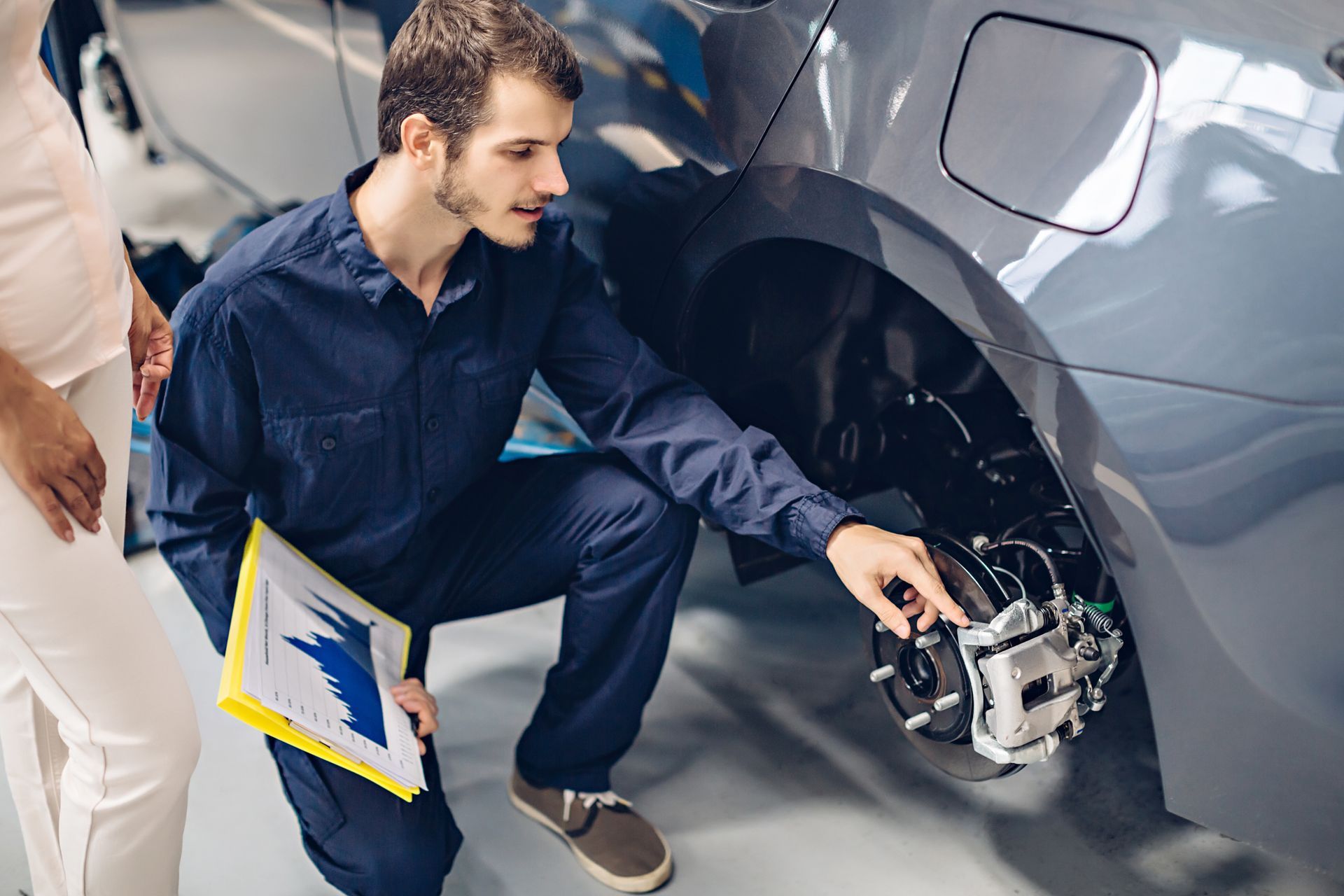
Brakes can cause a strong pull, only when you press the pedal:
- A sticking caliper on one wheel keeps that brake applied longer than the others, tugging the car toward that side.
- Collapsed rubber brake hoses can act like one-way valves, letting pressure in but not out, which holds one pad against the rotor.
- Severely uneven pad or rotor wear can change how quickly each wheel slows, making the car veer during stops.
- A parking brake cable that is partially stuck on one side of the rear axle can also create a constant light drag.
If the pull gets noticeably worse under braking, or you smell something hot near one wheel, the brake system needs attention before it causes rotor damage or a safety issue.
Is It Safe to Keep Driving?
A light tendency to drift on roads with a heavy crown may be more of an annoyance, but it still deserves a mention at your next service. If the car pulls noticeably on flat roads, the steering wheel sits off center, or the tires show odd wear, an inspection should be scheduled soon so the problem does not get more expensive.
When the pull is strong enough that the car changes lanes if you relax your grip, or it gets much worse when braking, it is smart to have the vehicle checked as soon as you can. A quick road test, tire check, and alignment measurement will reveal whether you are dealing with a simple tire issue, a brake drag, or a deeper suspension concern.
Get Pulling-to-One-Side Diagnosis in Plano, TX with Plano Lube & Auto Repair
We can road test your vehicle, check tires and pressures, measure alignment, and inspect brakes and suspension to see exactly why it is pulling. Once we find the cause, we will explain your options clearly so you can get the car tracking straight again with no guesswork.
Call
Plano Lube & Auto Repair in Plano, TX, to schedule an inspection and make your next drive feel calm and controlled instead of a constant fight with the steering wheel.